
Praise Kink or Degradation Kink: How to Know Which One You Need
He may say humiliation. What he usually means is something more tender and much harder to admit: that there is a private estimate of himself he has carried for years without ever speaking it, and he wants to know whether a woman who can see it will still want him in the room afterwards.
By Mistress Beate
There is a moment early in a D/s dynamic, before the first instruction and before anything has been agreed out loud, when a man tells me what he wants and then waits to see how I will hold it.
He may say humiliation. What he usually means is something more tender and much harder to admit: that there is a private estimate of himself he has carried for years without ever speaking it, and he wants to know whether a woman who can see it will still want him in the room afterwards.
That is not a small thing to ask. It is also rarely the thing being asked.
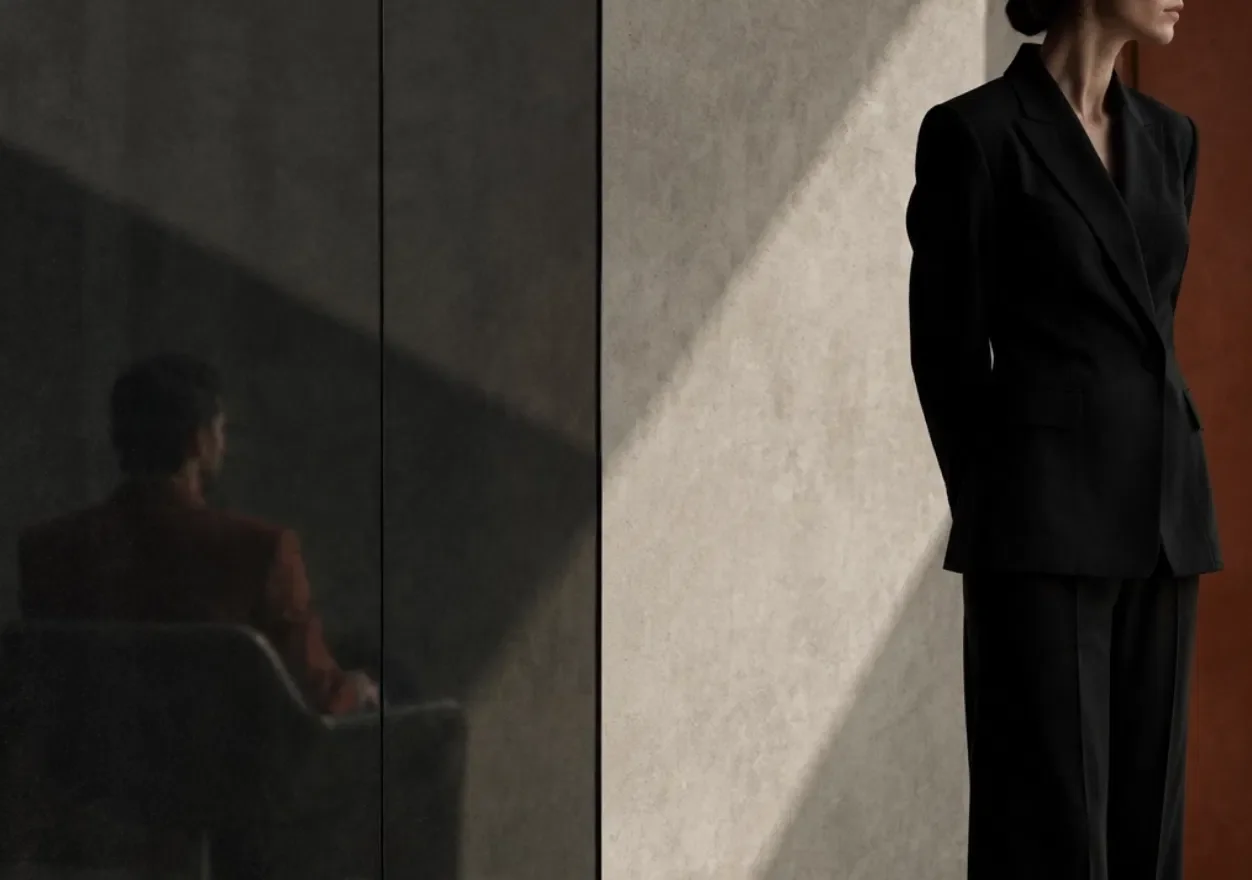
So I listen past the sentence. I notice how long the answer takes to arrive, whether it arrives before the breath does, what his hands do in the second after I stop speaking. A man who has to reach for a word is having a different experience from a man who already had one waiting. Neither is a diagnosis. Both are information, and I keep it.
Praise and degradation are usually treated as opposites. Inside a relationship built on genuine power exchange they are the same instrument, and both run on one mechanism: a man's opinion of himself is a private arrangement until a woman whose judgment he trusts begins commenting on it out loud. Then it becomes something live, and adjustable, and he can feel it being adjusted.
Approval says: I have looked at you and found you good. A man cannot give himself that verdict and believe it. It has to arrive from outside, from someone with no reason to flatter him and no interest in doing so.
Degradation says: I have looked at you and seen the thing you were hiding. Usually he has already said it to himself, at two in the morning, and never once heard it spoken back to him by a person who then stayed.
One lifts him. One confirms him. Both are forms of being read accurately, which is what most men are asking for and have learned to call a kink because it is the shortest word available to them.
The first ten minutes tell me more than any fantasy list
He arrives with an idea. I want humiliation. Be cruel. Don't go easy on me. The lines come out clean, rehearsed somewhere between the trip over to see me and my door, and shaped for a woman he was quietly afraid might judge him for them.
Some men rush into the space. They explain, they qualify, they apologise for taking too long, for not being clear, for wanting too much. I have accused them of nothing. They are already building a defence, and it is not for me.
Then the glance. He follows a simple instruction and his eyes come up to find my face, not to check whether I am angry but whether I am pleased. His mouth is still trying to look unmoved while his eyes ask the question it is hiding.
I saw.
That glance tells me more than the word humiliation ever will. Not because a single gesture is a confession, and not because I am reading a childhood off someone's posture. Because it happens twice, then three times, and a pattern becomes a map.
Reading a person is not mysticism. It is attention held over years, with a long memory for patterns: how long the answer takes to arrive, whether it comes before the breath does, what his hands do in the second after I stop speaking. What interests me most is the editing. Nearly every man edits himself between the thought and the sentence, and the size of the edit tells me how much of him is still in hiding.
Underneath all of it I listen for shame, because shame is the raw material of both praise and degradation and it behaves nothing like fear. Fear pulls back. Shame collapses inward and then covers the collapse with composure, and you can hear it in the extra half-second before a man agrees with me.

Mistress Beate, Berlin based Dominatrix
Why he asks for degradation, and flinches when it lands
Often the word is simply the most familiar one he has for intensity. It sounds decisive. It sounds filthy. It hands him a role before he has to explain what the role touches, and I understand the appeal of arriving with a costume rather than a confession.
Then I make it specific, and the costume stops fitting.
What is left goes very still, or laughs at the wrong moment, or looks at me as though I have stepped closer than expected. That flinch is not a stop sign. Sometimes it is the first honest thing to happen all evening, and sometimes it tells me we have found a real edge and are both now standing near it, which is where I wanted us.
Generic filth is easy, and it is boring. An insult thrown at a man means nothing if it could be thrown at any man; I might as well be speaking to the wall. Degradation carries weight only when it is precise and true inside the role he has handed me. The way he asks permission. The pride he carried in and set down at the door. The effort it takes to pretend he does not want my attention. I work with the material he gives me, and only that material. A broad request to be humiliated is not permission to invent wounds, and long before any of it we have agreed which words are in play and which are not.
The force is not in the volume. It is in whether he recognises himself.
And there is a relief in that recognition which men struggle to explain afterwards. He has spent years keeping a private opinion of himself carefully off the record. I put it on the record, in a room where the exits still work and the structure holds. Then nothing catastrophic happens. The roof stays up. He is still wanted, still kneeling, still mine to look at.
That sequence is therapeutic whether or not anyone in the room would use the word, and it only works because the words are true rather than theatrical. A man can shrug off being called a worthless worm; it bounces off him. He cannot shrug off being described accurately by a woman whose judgment he respects.

Praise is the sharper edge
Praise kink is not soft, and that is the misunderstanding I most enjoy correcting. It can be delivered without a single warm word, and it lands harder for it.
You held still when I told you to. You listened. You waited.
Then the silence returns, and he has to sit inside it with nothing but the sound of the sentence cooling on his skin.
Praise means I noticed, and that is precisely why withholding it bites. He obeys again, more carefully, composing himself for a sentence I may not give him. I let him wait. Not a trick and not cruelty for its own sake, but a choice made inside a dynamic he entered willingly and has not once asked to leave.
There is a particular vulnerability in being praised by a woman whose judgment he actually respects. An insult he expected is survivable. Approval is not, because it asks him to receive attention without immediately dismissing it, bargaining with it, or pretending he did not need to hear it.
Approval also asks him to revise something. A man will accept a punishment without changing one thing about how he sees himself, but being told he did well means the picture has to move, and some part of him resists that harder than any cane. Which is why praise must not be continuous. Approval handed out constantly becomes weather. Approval given exactly when it is earned, and withheld when it has not been, teaches a nervous system to orient toward me in a way no amount of volume ever will.
That is the crueller edge of it. Not sweetness. Precision. I see the effort, and I decide when it gets named out loud.